
Ultimate Disc 3D
24 HIT Riga SIASports
4.76.57K Reviews
- Version
- 1.2.42
- Installs
- 10.00M
- Age Rating
- Everyone
Screenshots
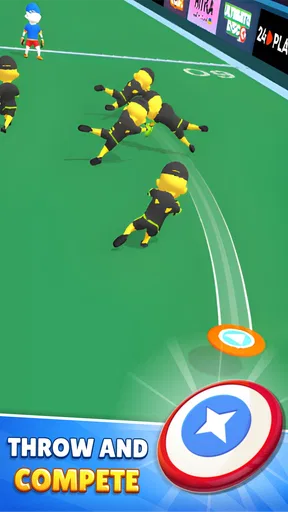
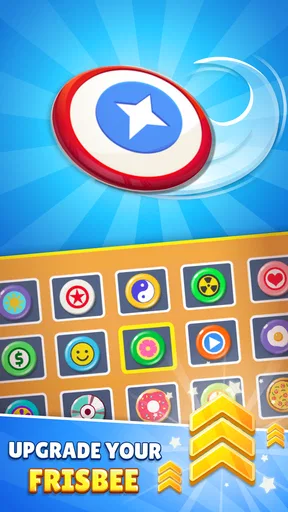
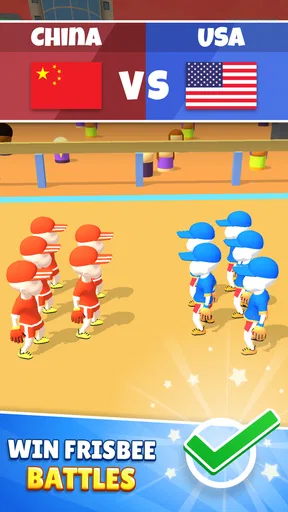
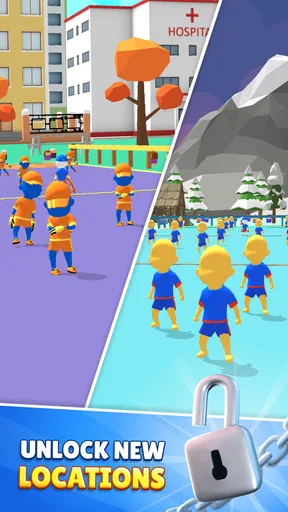
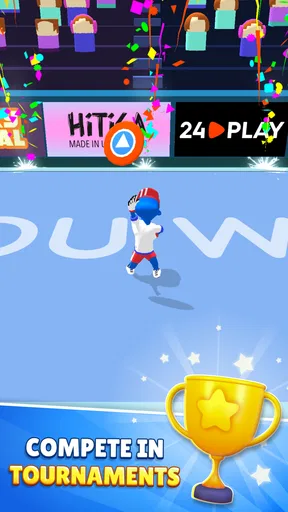
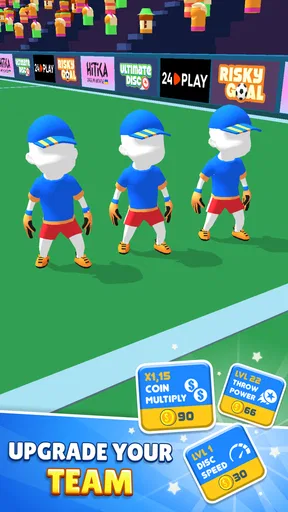
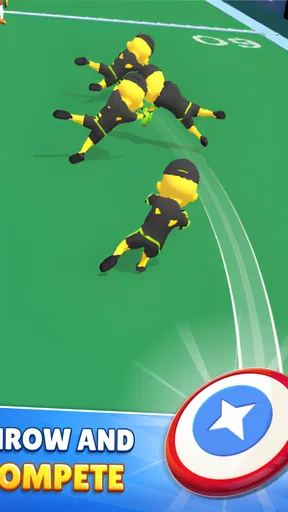
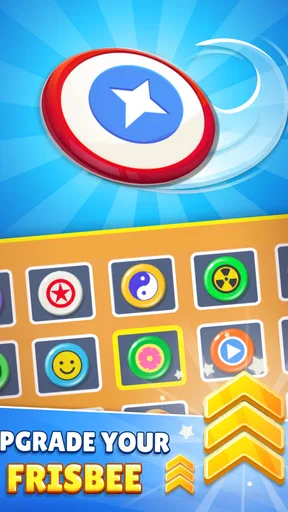
Our Review of Ultimate Disc 3D
 Analysis by Appyee
I went into Ultimate Disc 3D expecting a quick sports game and found something more focused: a compact throwing experience built around timing, direction, and the satisfaction of sending a disc cleanly toward its target. It is not trying to replace a full console-style sports simulation. Instead, it turns one recognizable action into the whole challenge, then asks you to repeat it with better control. That narrow idea is also the game’s biggest strength and its main limitation.
After spending time with it, my clear impression is that this is best enjoyed in short sessions. I can pick it up when I have a few spare minutes, make progress through a handful of throws, and put it down without feeling that I have abandoned a complicated team or career mode. The controls are easy to understand, but getting consistently good results takes more attention than the simple presentation first suggests.
What makes the throwing itself work
The central appeal comes from the gap between knowing what to do and doing it accurately. A disc may look simple to throw, yet small mistakes in timing or direction can turn a promising attempt into a miss. That gives each round a useful rhythm: observe the situation, commit to the throw, see the result, and adjust the next attempt. I like that the game makes improvement feel connected to my own decisions rather than to a long explanation or a complicated control scheme.
The three-dimensional presentation helps make those decisions readable. I can judge the target and the path in a way that feels more immediate than a flat, purely abstract sports puzzle. The visual style is not aiming for realism on the level of a large console production, but it does enough to support the important question before every attempt: where should I aim, and how carefully should I release?
That question becomes more interesting when I stop treating every throw as a race for maximum distance. A strong practical habit is to aim for repeatability first. When I try to force every attempt, a small control error becomes much more costly. Using a calmer, more deliberate motion gives me a better chance of learning how the game responds. This is one of the less obvious pleasures here: progress comes from building a reliable throwing routine, not simply tapping faster or taking wild chances.
The game also suits players who enjoy sports titles without wanting a large ruleset. There is no need to learn a full roster, memorize a long list of moves, or manage a season before the basic fun appears. The action is immediate, which makes it approachable for someone who has not played disc-based sports games before. I could hand it to a casual player and explain the idea quickly, while still having room to improve after the first few attempts.
Small-session design with a surprisingly demanding ceiling
In everyday use, I see this working well during a commute, while waiting for an appointment, or during a short break when I want something interactive rather than passive scrolling. The free price makes that trial especially easy, and the Everyone age rating means it is a straightforward choice for a broad audience. The trade-off is that a game built around one core action can lose its freshness if I expect the variety of a complete sports package.
That distinction matters. If I want a detailed football manager, a racing game with extensive vehicle tuning, or a team sport with multiplayer tactics, this is not the substitute I would choose. Its appeal is more concentrated. It gives me a polished reason to practice a throw, not a complete simulation of everything surrounding a disc sport.
For me, the strongest evidence that the formula works is how quickly a failed attempt can become useful feedback. A miss is not automatically frustrating because it tells me to reconsider the angle, timing, or amount of force I used. The loop is simple enough to understand and specific enough to reward attention. That is a better foundation for repeat play than a game that merely showers the player with effects without making the outcome feel earned.
There is also a useful distinction between casual success and dependable success. I can get a good result by instinct now and then, but repeating it requires discipline. My practical tip is to change only one part of my approach after a miss. If I alter aim, timing, and force all at once, I learn almost nothing from the next attempt. Adjusting one variable makes the game feel closer to practice, and it helps reveal which part of my throw caused the problem.
Where the simplicity starts to show
The main weakness is not poor execution; it is limited breadth. Because the experience is built around throwing the disc, players who need constant novelty may reach their personal limit sooner than expected. The same focused design that makes the game accessible can also make later sessions feel familiar. I would not recommend it to someone who needs a deep campaign, a large collection of sports, or a strong social competition layer to stay interested.
The in-app purchase range, from $2.99 to $8.99 per item, is another point worth considering before installing. The game itself costs nothing to start, which is convenient, but players who prefer completely frictionless free experiences should pay attention to purchase prompts and decide in advance whether they want to spend. I personally think the right approach is to enjoy the basic loop first and only consider an optional purchase if the game has already proved that it belongs in my regular rotation.
Another limitation is that the game’s narrow focus leaves less room for players who want strategic variety between attempts. In a broader sports game, I might switch teams, positions, tactics, or event types when I get bored. Here, the interest has to come from refining the throw and responding to the challenge in front of me. That is satisfying for a practice-minded player, but it is not the same as having a large menu of different activities.
I also would not confuse the accessible controls with effortless mastery. A beginner can understand the goal quickly, but that does not mean every attempt will land where intended. This is important for expectations: the game is friendly at the entry point, yet it still asks for concentration when I want consistent results. Players looking for a completely relaxed experience may find the repeated correction slightly more demanding than the bright, approachable presentation suggests.
How I would use it compared with other sports games
Compared with a full sports simulation, this game wins on immediacy. I can begin throwing almost at once, and I do not need to invest in a long setup before the central mechanic becomes enjoyable. Compared with an arcade sports title packed with several activities, it offers less variety but a clearer identity. I know what I am opening it for: a quick test of aim and timing.
That makes it a good companion rather than a universal replacement. I would choose it over a larger sports game when I have only a few minutes or when I want a single skill to practice. I would choose the larger alternative when I want a season, a story, team management, or a broader sense of progression. Neither approach is automatically better; they serve different moods.
One useful workflow is to treat a short session as a focused drill. I start by making a few conservative attempts, watch how the disc behaves, and then increase ambition only after I have a feel for the current challenge. This prevents the common mistake of judging the game after one careless miss. It also turns spare time into a small, repeatable routine rather than an unfocused burst of taps.
The game’s popularity supports the idea that this concise format has found an audience. It carries a 4.7 average from around 110 thousand ratings, with more than 10 million installs. Those figures do not guarantee that every player will enjoy the same pace, but they do indicate that the basic concept has connected with many people. I can understand why: the premise is immediately legible, the free entry point removes much of the risk, and the throwing mechanic has enough precision to encourage another attempt.
Who should install it, and who should skip it
I would recommend it to casual sports players, fans of skill-based mobile games, and anyone who likes a clear action that improves through repetition. It is particularly suitable for people who enjoy seeing a small personal mistake become a better result on the next try. Younger players can understand the objective without a dense tutorial, while older players may appreciate that a session does not demand a large time commitment.
It is also a sensible choice for someone curious about disc sports but unwilling to commit to a complex simulation. The game gives a simplified taste of throwing decisions without requiring knowledge of real-world tactics. That simplicity is useful for discovery, even though it should not be mistaken for a complete representation of the sport.
I would skip it if my priority is long-term variety. Players who quickly tire of repeating a central mechanic will probably be happier with a sports collection or a game that changes events more dramatically. I would also look elsewhere if competitive multiplayer, detailed customization, or a substantial narrative campaign is essential. Those expectations do not match what this focused throwing game does best.
Device compatibility is reasonably welcoming for an older phone or tablet because it runs on Android 7.1 or later. The current version is 1.2.42, and the developer is 24 HIT Riga SIA. For someone using an older compatible device, that lower operating-system requirement makes it worth trying, although the experience will still depend on how comfortably the device handles three-dimensional games.
My final take after putting it through its paces
My verdict is positive, with a clear condition: enjoy it as a focused skill game, not as an all-purpose sports simulation. The throwing mechanic is easy to grasp, satisfying when it works, and deep enough to reward patient adjustment. The three-dimensional view gives each attempt a useful sense of direction, while the short-session structure makes it easy to return to during ordinary gaps in the day.
The limitations are equally clear. The single central activity can become repetitive, and the optional purchases mean that free access does not necessarily represent the entire spending experience. Players who want broad content or a richer competitive structure should choose another type of sports game. That is not a failure of this title so much as a reminder to match it with the right expectations.
For my own recommendation, I would tell a friend to install it if they want a free, approachable way to practice aim and timing in brief sessions. I would suggest starting slowly, changing one throwing decision at a time, and judging it by the satisfaction of improving rather than by the size of its content list. Its best quality is the honest connection between your input and the result: when a throw succeeds, it feels like I made a better decision, and when it fails, I usually know what I want to try next.
That makes Ultimate Disc 3D a worthwhile pick for the right player. It is compact, readable, and more demanding than its simple premise sounds. I would not make it my only sports game, but I would keep it available for those moments when I want one clear challenge, one more attempt, and the chance to turn a slightly better throw into a satisfying finish.
Verdict
Strengths of Ultimate Disc 3D
- Simple controls make it easy for newcomers to start playing.
- Quick matches are well suited to short gaming sessions.,3D visuals give the flying disc and arenas a lively appearance.
- Progression provides goals beyond completing individual matches.
- Offline play is useful when you do not have an internet connection.
Limitations of Ultimate Disc 3D
- Some matches can feel repetitive after extended play.
- Precision throws may take time to master on touch controls.
- Difficulty spikes can make later challenges frustrating.
- Ads or optional purchases may interrupt the overall experience.
- The game may become less engaging for players seeking deep strategy.
Other Releases by 24 HIT Riga SIA
View All


Similar Picks in This Category
View All
8 Ball Pool
Miniclip.com4.8

Pooking - Billiards City
AIM TOP GAME TECHNOLOGY LIMITED - pool4.6

Carrom Pool: Disc Game
Miniclip.com4.4

EA SPORTS FC Soccer Mobile 26
ELECTRONIC ARTS4.6

World Soccer League
mobirix4.3

Soccer Cup 2026: Football Game
INLOGIC SPORTS - football tennis golf soccer4.3
Frequently Asked Questions
What is Ultimate Disc 3D?
Ultimate Disc 3D is a casual sports game focused on throwing and catching a flying disc through colorful 3D levels. The gameplay is designed to be easy to understand, with simple controls that usually involve aiming, timing, and adjusting the strength of each throw. It is aimed at players who want short, relaxing sessions rather than a complex competitive simulator.
How do you play Ultimate Disc 3D?
The main objective is to guide the disc accurately through each stage and reach the target while avoiding obstacles and mistakes. Players generally swipe or tap to control the direction and power of a throw, then try to catch or deliver the disc successfully. As the levels progress, moving objects, narrower paths, and more demanding timing make the challenges increasingly difficult.
Is Ultimate Disc 3D free to download and play?
Ultimate Disc 3D can generally be downloaded without an upfront purchase, allowing users to try the core gameplay at no cost. However, free mobile games may include advertising, optional purchases, or both. These extras can sometimes provide cosmetic items, bonuses, or ways to reduce waiting. Check the store listing on your Android or iOS device for the current pricing and purchase details.
Does Ultimate Disc 3D require an internet connection?
The basic levels of Ultimate Disc 3D may be playable without a constant internet connection, which makes the game suitable for quick sessions while traveling or when mobile data is unavailable. Nevertheless, an internet connection may be needed for advertisements, updates, cloud features, rewards, or purchases. Offline availability can vary by version, so test the game after installation before relying on it without connectivity.
Is Ultimate Disc 3D suitable for children and casual players?
Ultimate Disc 3D is generally approachable for casual players because its concept is simple and the controls are easier to learn than those of a full sports simulation. Younger users may enjoy the bright visuals and short levels, but parents should still review the age rating, advertising, and in-app purchase information. Difficulty can increase later, so the experience may eventually require patience and precise timing.
Play our best games!


